
"Harvest time"
10000 article(s) found

Brazilian coffee beans will have a bumper harvest this year, but their prices have plummeted.
Professional coffee knowledge exchange more coffee bean information please follow coffee workshop (Wechat official account cafe_style) Brazilian coffee flavor characteristics manor producing area _ Brazilian boutique coffee after years of soaring coffee bean prices in Brazil, many cash-rich farmers have expanded their investment in growing coffee beans, but at the time of this year's harvest, coffee beans are expected to have a bumper harvest.

Why is the harvest time of coffee so long? Which method is better, manual picking or mechanical harvesting?
How is the coffee harvested? Coffee is processed in different ways. From seeds to cups, there are countless decisions and different ways of doing things. Only through careful experiments and research can coffee realize its true potential. Coffee picking is the first step for ripe cherries to enter our cup. There are two ways to use them. Selective harvest is to pick mature coffee cherries only by hand.

Basic knowledge of boutique coffee harvest and treatment of coffee
Harvest occurs in different months of the year (depending on the geographical location of the producing country), depending on the maturity of the fruit. The harvest time depends on the geographical location, climate and altitude, and varies according to the situation of each producing country. Ripe fruit can be picked by hand, raked with a small rake, or hit to the ground with a pole: the first two methods can be carried out by low-cost labor, and they

Harvest and treatment of Coffee processing methods of Coffee beans
Harvest occurs in different months of the year (depending on the geographical location of the producing country), depending on the maturity of the fruit. The harvest time depends on the geographical location, climate and altitude, and varies according to the situation of each producing country. Ripe fruit can be picked by hand, raked with a small rake, or hit to the ground with a pole: the first two methods can be carried out by low-cost labor, and they

The basic situation of Coffee Tree planting Coffee harvesting and processing
Timely harvest is an important link to ensure high coffee yield and improve product quality. The standard of harvest varies with different varieties: the harvest time of small seed coffee is more concentrated, and the fruit can be harvested when the fruit turns red, and it should be picked with ripening. If the fruit turns red completely, the fruit is easy to fall off. The harvest time of medium-and large-grain coffee is longer, and it can wait until more fruits are red or purple.

Introduction of Burundian Coffee single Bean Flavor description Variety planting Development History production area treatment method
Professional baristas Please follow the Coffee Workshop (Wechat official account cafe_style) Burundian Coffee A rich, soft-tasting coffee from the war-torn areas Burundi (Burundi) has the most diverse and successful coffee industry in the world and has its own characteristics. Coffee in this country was introduced by Belgian colonists in 1930 and is now grown only on small farms. No.

Coffee tree fruit from fruiting to maturity takes 6 to 9 months specific time introduction
One of the characteristics of coffee trees is that its fruit can bear fruit several times a year, and another characteristic is that flowers and fruits (also known as cherries) coexist at different stages of maturity. The whole coffee crop is subject to the vagaries of nature. If the fruit is overripe, the beans inside will rot. if not
Harvest and treatment of Fine Coffee
Harvest occurs in different months of the year (depending on the geographical location of the producing country), depending on the maturity of the fruit. The harvest time depends on the geographical location, climate and altitude, and varies according to the situation of each producing country. Ripe fruit can be picked by hand, raked with a small rake, or hit to the ground with a pole: the first two methods can be carried out by low-cost labor, and they

The treatment of coffee beans after harvest.
Coffee beans must be disposed of immediately after harvest so as not to go bad. The producer will use two methods of treatment: the sun method and the cleaning method. An effective way to bask in the sun is to spread the berries flat in the yard and stir the dehydrated berries from time to time to make them evenly heated and breathable. Then put the dried berries into the machine, crush the shell, and remove the shell and a layer of parchment at the same time

What are the steps and harvest time for picking coffee beans
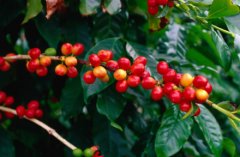
After 3 or 4 years of growth, the coffee tree matures and begins to bear fruit, and the fruit will be arranged in clusters or clustered together along the branches. The coffee beans we see are the seeds of the coffee tree. The outside of the seed is a layer of pericarp, with the maturity of coffee beans, the pericarp will change from green to red, as soon as it turns red, it can be harvested. The structure of coffee fruit is usually a layer of pulp (mesocarp) under the exocarp.

The cultivation process of Coffee beans: sowing and harvesting course
Communication of professional baristas Please pay attention to the cultivation process of coffee in the coffee workshop (Wechat official account cafe_style) Coffee is often mistakenly thought that coffee is directly grown with raw beans, but it takes a long time to grow only to find that it never germinates. In fact, coffee is grown with seeds with endocarp (Parchment). Inner fruit (or sheepskin or papery) refers to tea wrapped in coffee seeds.

What are the factors that affect coffee quality?
The annual coffee harvest period, for example in El Salvador, is from November to February to March of the following year, which is a dry and cold season, which is very suitable for picking coffee fruits, but all of this will be variable due to rainfall. The author was in El Salvador at the time of writing and witnessed the dramatic changes brought about by rainfall. The flowers on the coffee trees bloomed when the workers harvested them. Br

Harvest time and processing of coffee beans in Brazil how to judge whether coffee beans are new or old
There are many ways to grow, harvest and process coffee in different producing countries around the world. In the Cerrado Mineiro region of Brazil, where Ally Core Coffee Paubrasil comes from, coffee is harvested either manually or mechanically, and most of the coffee is natural. Coffee harvesting coffee beans are the seeds of a fruit called cherry, which grow on tall leafy trees.

In the process of coffee cultivation, coffee is grown with seeds with endocarp.
In the process of coffee cultivation, some people mistakenly think that coffee is grown directly with raw beans, but it takes a long time to grow but find that it does not sprout. In fact, coffee is grown with seeds with endocarp (Parchment). The inner fruit (or sheepskin or paper parchment) refers to the tea-brown hard skin that wraps the coffee seeds, and the coffee beans attached to that layer are called Parchment Bean. Dial

There are three main ways to harvest coffee beans, coffee and cherries.
Professional coffee knowledge exchange more coffee bean information please follow the coffee workshop (Wechat official account cafe_style) Coffee Cherry ripening season is mostly from June to August in Arabica and from September to October in Robusta. For coffee quality and flavor, coffee cherry harvest is a very critical step, the subsequent stages can only maintain, can not improve the quality and flavor of coffee.

The cultivation process and sowing of Coffee in Yunnan & does #160; Coffee belong to Arabica?
People often mistakenly think that coffee is grown directly with raw beans, but it takes a long time to grow coffee only to find that it doesn't sprout. In fact, coffee is grown with seeds with endocarp (Parchment). The inner fruit (or sheepskin or paper parchment) refers to the tea-brown hard skin that wraps the coffee seeds, and the coffee beans attached to that layer are called Parchment Bean. Put aside the full maturity

Introduction to the harvest time of Vivette Nanguo coffee beans in Guatemala
Guatemala Vivette South Fruit Coffee beans Harvest time this dried bean aroma with a strong melon and fruit aroma, with a slightly sweet flavor. Almost in the first moment of grinding, the aroma is close to the mouth and nose, very prominent. The finish is also a little creamy and nutty. Smelling dry incense is very important. Do you remember when I shared the Shanghai White Bird Cafe? In the store
Coffee harvest time of coffee beans in the main producing areas of the world
Regional harvest period Brazil from May to late June Colombia from October to late February of the second year, China and the United States, from October to late February of the second year, mocha, from early October to late January of the second year, Africa Robsta, from early October to late January of the second year, Arabica, Africa, from early October to late January of the second year, Indonesia EK-1 from March to late May, to ensure that coffee cherries remain unchanged.

General knowledge of dealing with high-quality coffee after coffee bean harvest
Coffee beans must be disposed of immediately after harvest so as not to go bad. The producer will use two methods of treatment: the sun method and the cleaning method. An effective way to bask in the sun is to spread the berries flat in the yard and stir the dehydrated berries from time to time to make them evenly heated and breathable. Then put the dried berries into the machine, crush the shell, and remove the shell and a layer of parchment at the same time
How coffee is sown and harvested
Seeds, not beans. In fact, coffee beans are the seeds of red-skinned coffee fruits that look like ripe cherries. Each fruit usually contains two seeds, which must be taken out and dried to produce two raw coffee beans to be roasted later. The coffee wrapped in endocarp will be planted to the seedbed and will germinate in 40-60 days and grow to about 50 cm in about 6 months after germination. In